
Every so often in family history you find a record that stops you in your tracks and haunts you long after you first find it. For me, that moment came with the discovery of the inquest reports into the death of Catherine Herald, my 2nd great-grandaunt, who died in March 1895 after a night spent exposed to rain and cold on a lonely road outside Coleraine. The first account I found, in the Belfast Weekly News (see end of this article for full report), was stark enough. A fuller report in the Coleraine Chronicle (see end of this article for full report) filled in the spaces between the lines, and somehow made the story even more haunting.
A simple plan that went wrong…
Catherine was thirty-seven years old and lived with her brother George at Landmore, Aghadowey. She was described several times as “delicate”. In rural nineteenth-century Ireland, to be “delicate” often meant living close to the edge of good health: undernourished, physically worn down, vulnerable to hardship.
On Wednesday 27 March 1895, her married sister Jane Edmundson travelled from Coleraine to spend the day with her. Nothing unusual. Sisters visiting, sharing a meal, passing the hours together. That evening, between five and six o’clock, Jane prepared to return home by train. Catherine walked with her to the station, but when they reached the bridge they realised the train had already left. Seven miles was a long walk, but not an impossible one. The sisters decided to walk together toward Coleraine along the country roads.
A wrong turn in the dark….
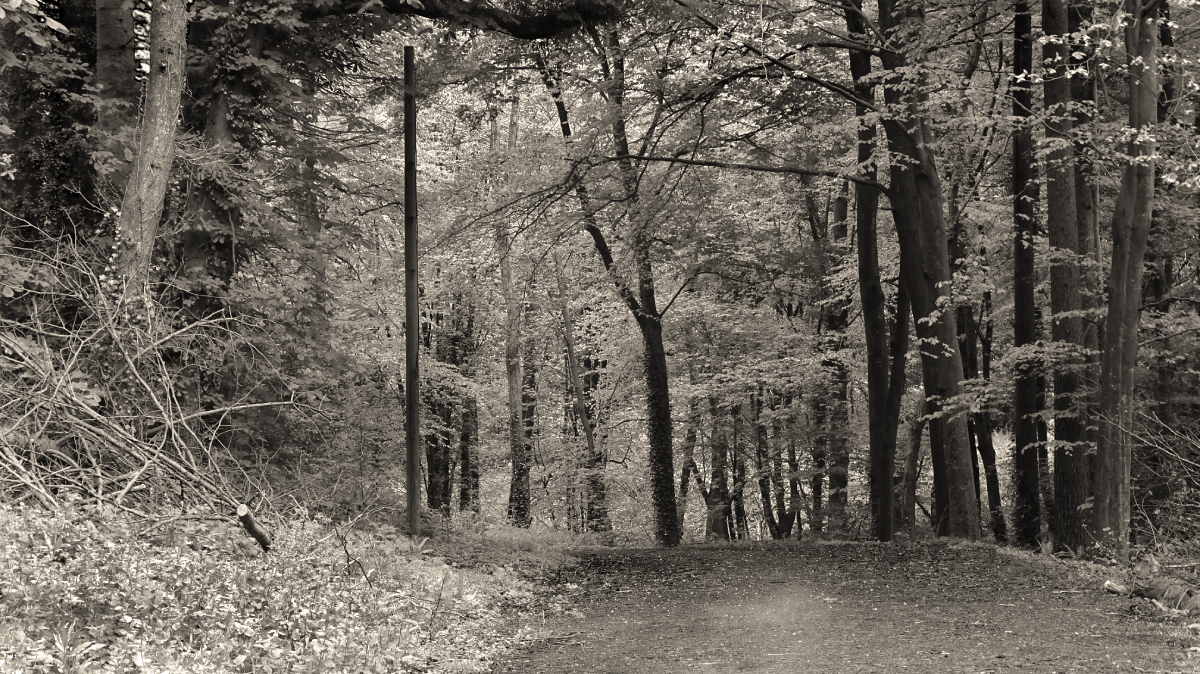
Darkness fell as they passed Holland’s Mill at Ballylintagh. Near Killure, Jane realised she had taken the wrong road, though she believed it would still bring them home eventually. Today it is difficult to fully imagine what it would have been like navigating in in pitch darkness. These were rural roads in 1895: no street lamps, no passing cars, no torches, no lit windows stretching along the roadside. Beyond the scattered glow of distant farmhouses there would have been almost complete blackness — uneven roads, mud, rain, hedges and open fields disappearing into night.
Somewhere along that unfamiliar stretch, Catherine began to weaken. Jane urged her forward, but Catherine insisted she must sit down. It was raining heavily now, cold and windy, and she sank beside the roadside ditch. Jane sat beside her. The report tells us they remained there through the entire night while rain fell steadily and the temperature dropped. Catherine drifted in and out of consciousness. Several people passed along the road, but Jane asked none of them for help.
Reading the inquest now, what strikes me most is not only the tragedy, but the fear that must have surrounded those hours: two women alone in darkness, lost on unfamiliar roads, soaked through, uncertain where they were or how far they still had to go.
The coroner returned repeatedly to this point:
- “Did you ask any of them for help?”
- “No.”
- “Why didn’t you?”
- “I didn’t want to. I thought she would be alright in half-an-hour or so.”
Later she added:
“I didn’t like to go to any place. That’s all.”
To a modern reader, this hesitation can seem almost impossible to understand. But in 1895, respectability carried enormous weight, especially for working-class women. Knocking at strangers’ doors late at night could invite gossip, suspicion or shame. There is also something deeply recognisable in Jane’s answers: pride, uncertainty, the naïve hope that things would improve if they simply waited a little longer. So the sisters remained by the roadside until morning.
At dawn, Jane tried to help Catherine to her feet. For a short time she appeared slightly stronger, but then she collapsed again and lost the ability to speak. Only then did Jane go for assistance, knocking at the nearby Gaston household — a house that, heartbreakingly, had been awake all night with illness of its own inside, keeping them up and awake. Catherine was carried indoors, soaked through and barely conscious. Dr Morrison arrived later that afternoon. He found her “perfectly cold,” her clothing saturated, her body exhausted beyond recovery. Blankets, warmth, milk and whiskey could do nothing for her.
The official verdict was blunt:“Death from exhaustion following exposure to cold and wet.”
The family around her
The fuller report in the Coleraine Chronicle also brought familiar names into view. One witness was Catherine’s sister Nancy McQuillan — the mother of my great-great-grandfather James McQuillan. Nancy lived next door to Catherine and confirmed that her sister had “always been a delicate girl.” She also explained that only a small quantity of whiskey had been shared among family members earlier in the day. It is strangely moving to picture that ordinary domestic scene: sisters together for an afternoon visit, a modest drink shared among family, an entirely unremarkable day ending in tragedy.
Judgement, morality and class
Reading the reports now, what stands out most is not simply the tragedy itself, but the tone of the coverage surrounding it. The inquest is presented almost entirely as a procedural exercise as was custom at the time. The focus rests on establishing cause of death, identifying responsibility and examining behaviour. Again and again, the questioning returns to the same themes:
- Why did Jane not seek help?
- Had there been drink?
- Were the women behaving respectably?
Even the smallest details of alcohol consumption are carefully recorded. Victorian newspapers often treated drink as a form of moral shorthand — a quiet suggestion that behaviour might be interpreted through the lens of personal failing rather than circumstance. One witness described the sisters as “staggering.” They might equally have appeared exhausted, soaked, frightened or disoriented, but it is “staggering” that survives in print.
The scrutiny directed at Jane feels especially harsh. While clearly grieving, she is questioned almost as though she herself stands trial. Yet beneath the formal language, other realities quietly emerge. Dr Morrison described Catherine as “a somewhat delicate, badly nourished woman who could ill stand exposure.” That single phrase reveals far more than the newspaper chooses to explore.
Poverty appears only briefly, almost accidentally, before disappearing again beneath the procedural language of the inquest. There is little reflection on hardship, physical exhaustion or the vulnerability of rural working-class life. Instead, the attention remains fixed on conduct, judgement and blame.
Would the reporting have been different for a middle-class woman? Very likely, yes. If this had involved a merchant’s wife, a professional family, someone socially prominent the language would probably have shifted toward: “melancholy circumstances” “deep regret” “much sympathy for the bereaved” – emphasis on shock and misfortune.
Even the location matters — a “cottier-house,” a roadside ditch, saturated clothing. The setting itself signals class. Victorian journalism often mirrored the social hierarchies of its time. Middle-class tragedy was more readily framed with sympathy. Working-class tragedy was more often examined for fault.
The emotional silence
Perhaps what lingers most, with me, is the emotional silence of the reports themselves. There is no language of mourning. No suggestion that the scene was distressing or heart breaking. No expression of sympathy for the family. There is no line like: “The scene was most affecting.” “The family are much respected.” “Great sympathy is felt.” I’ve read all of these phrases in reports of middle class/protestant, unfortunate events. Instead there are lists of jurors, train times, road names, measurements, whiskey quantities. To some extent, this was simply the style of nineteenth-century inquest reporting — factual, quasi-judicial, emotionally restrained. But the coldness also reveals something about the period itself: a deep instinct to search for responsibility before compassion.
Even with the fuller account, the story leaves unsettling questions behind.
- Why did neither sister decide to stay the night with nearby relatives?
- Why did Catherine insist on attempting such a difficult walk in poor health?
- How many similar tragedies unfolded quietly across rural Ireland, leaving behind only brief official records and fragments of memory?
Genealogy often begins with names and dates, but sometimes it uncovers something far more fragile: traces of ordinary human lives caught briefly in the archive before disappearing again into silence. Catherine leaves no tangible legacy, she is not remembered in history by grand achievements, or famous deeds. Her name survives on her mother’s death registration and via these sad newspaper reports about her inquest.
Yet she was a daughter who cared for her mother, an unmarried sister who most likely cared for her brother too, a woman who didn’t let her sister walk home alone, out of kindness, a woman described as gentle and delicate by those who knew her.

When I read the inquest, I see ordinary people doing their best with the limited choices they had. Catherine’s death feels all the more tragic though because it was so avoidable. Sometimes history turns on such small, human moments.
I do not know where Catherine is buried. That search is still ongoing. Telling Catherine’s story however feels like a way of bringing her back into the family she never truly left. Catherine’s name appears in the records only for a moment. Then the page turns, and the family story goes on, through other seasons, other births and burials, other ordinary days. Her life is not measured by the inquest that closed it. It lingers instead in the spaces between lines: in sisters walking the same roads, in the unspoken knowledge that families carry forward both sorrow and strength. To remember her now is simply to let her stand again, not as evidence, but as family.
What this means for your research
An inquest means a death somebody thought needed explaining; it could have been sudden, violent, unattended, or simply unaccounted for. If an ancestor died in circumstances like that, there may be a record of it far richer than anything on the death certificate.
Coroners’ papers for Ireland survive very patchily. For a great many inquests, the newspaper report is now the fullest surviving account there is. What would otherwise be a single line in a register, name, age, cause, becomes sworn testimony, the names of neighbours, the layout of a house, the weather on a particular night in March.
Go looking for an inquest when you see:
- a death away from home
- a death described as sudden, or from exposure, drowning, burns or accident
- a coroner’s name on the death certificate
- a gap between the date of death and the date of registration
Look again at any death certificate you already hold. If a coroner is named, or the informant isn’t a family member, search the local papers for the fortnight or so that followed.
Coroners’ papers and inquest records for Ireland can be found across several national archives, regional record offices, and local government bodies depending on the time period and location.
- Public Record Office of Northern Ireland (PRONI)
PRONI holds thousands of historical coroners’ inquest papers (particularly from 1872 to 1920) for the counties that make up Northern Ireland.
The physical papers are not always fully digitized online, so you may need to order copies or visit in person. - The Virtual Record Office of Ireland & National Archives
The Virtual Record Office of Ireland / Virtual Treasury is reconstructing records lost in the 1922 Public Record Office fire, including surviving fragments and series of Coroners’ Inquests (1735–1894) and Coroners’ Election Papers. - Local Newspapers.
Alternative Resource: Because many 19th-century and early 20th-century Irish court and coroner records were destroyed or lost, local newspapers can fill the gaps for missing official files. They frequently published detailed transcriptions or summaries of coroner’s inquests.
Read full newspaper report- ‘Sad death from Exposure near Coleraine’: Belfast Weekly News – Saturday 06 April 1895
An inquest was held on the 30th ult before W.H. Caldwell, JP, Coroner at Macleary near Coleraine, on the body of a single woman named Catherine Herald, thirty-seven years of age, who died that morning from the effects of exposure to cold and wet on the 27th ult. Head Constable Tilson, R.I.C., Coleraine represented the authorities.
From the evidence of Jane Edmundson, a married sister of deceased, it appeared that the two women, with a third sister had spent the day at Landmore, Agivey, where deceased resided.
In the evening Mrs. Edmundson left, accompanied by deceased, to catch the Dairy Central train for Coleraine, but missed it. They then decided to walk the distance (about 7 miles), but after night fall deceased became exhausted, and, notwithstanding the efforts of her sister, she could not keep on her way, but sat down on the roadside about 20 perches from the house of a labourer named Gaston.
Two or three persons passed them on the road, but Mrs Edmundson made no complaint to any of them, nor did she endeavour to obtain assistance at any of the adjoining houses.
She explained to the coroner that she did not wish any person to know who they were or why they were out so late, it being then about nine o’clock. It was also stated by her that she did not know she was so near houses, not having observed any lights, and that she had made a wrong turn and missed her way, but knew that she could get home by that road.
The night was wet and stormy, but the pair sat on the roadside until daybreak, deceased having become unconscious and recovered in the meantime. When day dawned they attempted to proceed but deceased again collapsed, and Mrs Edmundson summoned help from Gaston’s house and had her sister conveyed there.
Doctor Morrison, Medical Officer of Aghadowey District, stated that on seeing deceased at two o’clock on the 28th ult. he found her quite unconscious, perfectly cold and her clothing saturated with wet. She was put to bed, rolled in warm blankets and every effort used to restore animation but without success. Death resulted from exposure to cold and wet.
In answer to the head-constable. Mrs McQuillan, sister of the deceased, said the latter had been a delicate woman. On the day of the visit there were two half pints of whiskey consumed by five persons, including deceased, her sister, and witness. But when the pair left the house, they were quite sober.
Another witness said he saw two women, presumably the same pair, staggering on the road close to where they spent the night.
The jury found the verdict in accordance with the medical evidence and discussed the advisability of censuring Mrs Edmundson’s conduct, but subsequently agreed not to add a rider which might involve the woman in criminal proceedings.
Read full newspaper report – ‘Sad Death from Exposure near Coleraine’ : Coleraine Chronicle, Saturday 06 April 1895
Inquest on the body
On Friday evening Dr. W.H. Caldwell, J.P., Coroner for Coleraine and district, held an inquest in a cottier-house owned by Mr Hugh Kennedy, at Macleary, on the body of Catherine Herald (aged 37 years), a single woman, who resided at Claggan, Landmore, Aghadowey, and who died that morning in the house of a labourer named Gaston, from the effects of exposure to cold and rain on the roadside at Macleary on the previous Wednesday night.
Head-Constable Tilson, with Constable Gallagher, McLernon and McKeown, represented the authorities at the inquiry, and the following were sworn on the jury:- Messrs. John F. McLaughlin (foreman), David Love, Robert McCurdy, William Hanson, John Usher, James Crowe, John Mooney, John Forsythe, Robert Maxwell, Joseph McFetridge, Wm. Reid, Robert Patton, Thomas Miller, and Alex. McKinney.
Jane Edmundson, the first witness stated that she lived at Castleroe. The deceased, Catherine Herald was her sister, and was about 37 years of age. She lived with her brother at Landmore. Witness went to see her on Wednesday morning by the 8.50 train from Coleraine, and remained all day. Deceased was apparently in her usual health.
Between 5 and 6 o’clock witness and deceased left the house to go to the station. On looking over the bridge witness saw that it was 6.30, and came to the conclusion that the train had passed. Witness then said that she must walk home and her sister came with her.
Darkness settled down when they reached Miss Holland’s Mill at Ballylintagh, or Collins. Her sister was all right up to that point, and they had been in no house on the way. When they reached Killure witness found that instead of going by the Gleneary Road, she had taken a wrong turn, but she knew she could get home by that way.
Her sister then complained of weakness, and sank down on the road. Witness raised her and urged her to come on, but she said she was not able, and said she would have to sit down. Witness said she should not do that on such a wet night, but deceased said she must, and then she sat down on the side of the road, witness sitting down beside her.
It was clear daylight before the witness rose up. Head-Constable Tilson –” How long was she ill after sitting down?” “I could not say. ”
“Might she have been two hours ill?” “She might.”
“Did she afterwards recover?” “Yes.”
“Was it raining all that time?” “Yes.”
“When she recovered did you try to bring her to any house?” “No.”
“Did she say what ailed her?” “She asked me if I would go home now, and I said I would stay until it was clear, for it was very dark.”
“Did you know the road you were on?” “Yes, but I was not aware I was so near a house. My sister only complained of weakness. ”
“Did anyone pass you on the road?” “Yes.”
“Did you speak to anyone?” “I asked one man what he wanted, as he was standing looking, but he never spoke at all.”
“Did many people pass you?” “I could not say there were many. ”
“Did you ask any of them for help?” “No.”
“Why didn’t you?” “I didn’t want to. I thought she would be alright in half-an-hour or so.”
“Had she had any drink that day?” “She had taken a little – not much – in my sister’s house. ”
“Had you any along the way?” “No.”
“Was she able to walk well enough?” “Yes.”
“Had she been ill before this?” “I do not know that she had been ill, but she was delicate enough – not lying, but for some time past she had not been very strong.”
Witness further stated that some time since, deceased had taken a weak turn while attending Coleraine chapel along with her.
When it was breaking day on Thursday morning she tried to get deceased to come on home, as she appeared all right, but in ten minutes or so after starting she again took ill, and could not speak.
Witness tried to get her up, but failed, and she then went to Mr Gaston’s house for assistance. When they got her in there witness sent for Dr. Caldwell, but he was engaged elsewhere. Dr. Morrison came to the house to see Mr. Gaston’s boy, and he attended to deceased.
She never spoke but once after being taken into the house, and she died between twelve and one that morning.
The Head-Constable – “Didn’t you think it strange, now, that you didn’t ask any of the people along the road for help?” “No; I didn’t wish to do that.”
“Mustn’t you have been wet through?” “No; my inside clothes were not wet.”
“Didn’t you see a light in some of the houses?” “No; I didn’t want to go to any place – I didn’t like to go. That’s all.”
The Coroner – “Did she complain that day?” “No; she said it would be cold, when she wanted me to go home, but she was then all right and warm enough until morning.”
A Juror remarked that it was a singular circumstance that the witness did not look out for shelter on such a wet night. Witness said she did not think her sister was so ill; if she had she would have looked for help.
The Coroner – “Did she intend going with you when she left home?” “Not if I had caught the train.”
Nancy McQuillan stated – “Deceased was my sister, and lived next door to me. I recollect my other sister, Mrs. Edmundson, coming to my house and then going to my sister’s. I didn’t see drink in her house that day, but from the time my sister came there were two half-pints of whiskey distributed over five people in my house. When leaving both of them were all right, but I thought they would be too late for the train. Deceased was ill about three weeks ago, but we thought it was just with the cold. She was always a delicate girl. “
Margaret Gaston, Macleary, said – “Mrs. Edmundson came to my door between five and six o’clock on Thursday morning, and I went with her to where her sister was leaning up against the ditch. She was very weak and helpless. My sister and daughter carried her to my house. Mrs. Edmundson said something about their having lost their way, and I said if she had come to our house that we were up all night with the child. If she had been looking she might have seen the light, but the shutters were on. In my house deceased had every attention and Dr. Morrison was in attendance on her. There was no appearance of drink on either deceased or her sister. She never spoke in my presence. Her teeth were closed all the time, and we could not get anything administered to her. ”
Wm. James Gibson said he was on the road at Killure School House between 8:00 and 9:00 on Wednesday night. He passed two women there but did not know them. He thought there was something wrong with them as they appeared to be staggering across the road, but he did not know the cause. It was very dark and raining at the time. Witness remarked that it was a “sott evening” but they made no reply. When returning, witness saw them almost half a mile further along, standing in the middle of the road, but he did not speak to them. It was then about nine o’clock.
Mr. Kennedy remarked that he observed two women on the road about 9.15 that night. Dr. H.S. Morrison, medical officer of Aghadowey dispensary district, said he came to the house at about two o’clock. The deceased was lying at the side of the fire, quite unconscious, and her hands and feet perfectly cold. She was quite exhausted and all her clothing was saturated with wet. Witness got her put to bed, rolled in dry blankets, gave her warm milk and whisky and did everything possible to restore circulation of the blood, but it was no use. So far as he could see, the woman died of exhaustion following the exposure to the cold and wet.
Witness knew the deceased and that she was a somewhat delicate, badly nourished woman who could ill stand exposure on such a night as Wednesday.
To a juror – Witness did not detect any smell of drink about deceased, and her sister was then quite sober. The jury found the deceased died from exhaustion following exposure to cold and wet.
Several jurors made remarks on the neglect of Mrs. Edmundson in not asking for assistance but they decided not to add anything to the verdict, as it might lead to proceedings against her, and they did not think her conduct amounted to (page cuts off here)



Leave a Reply